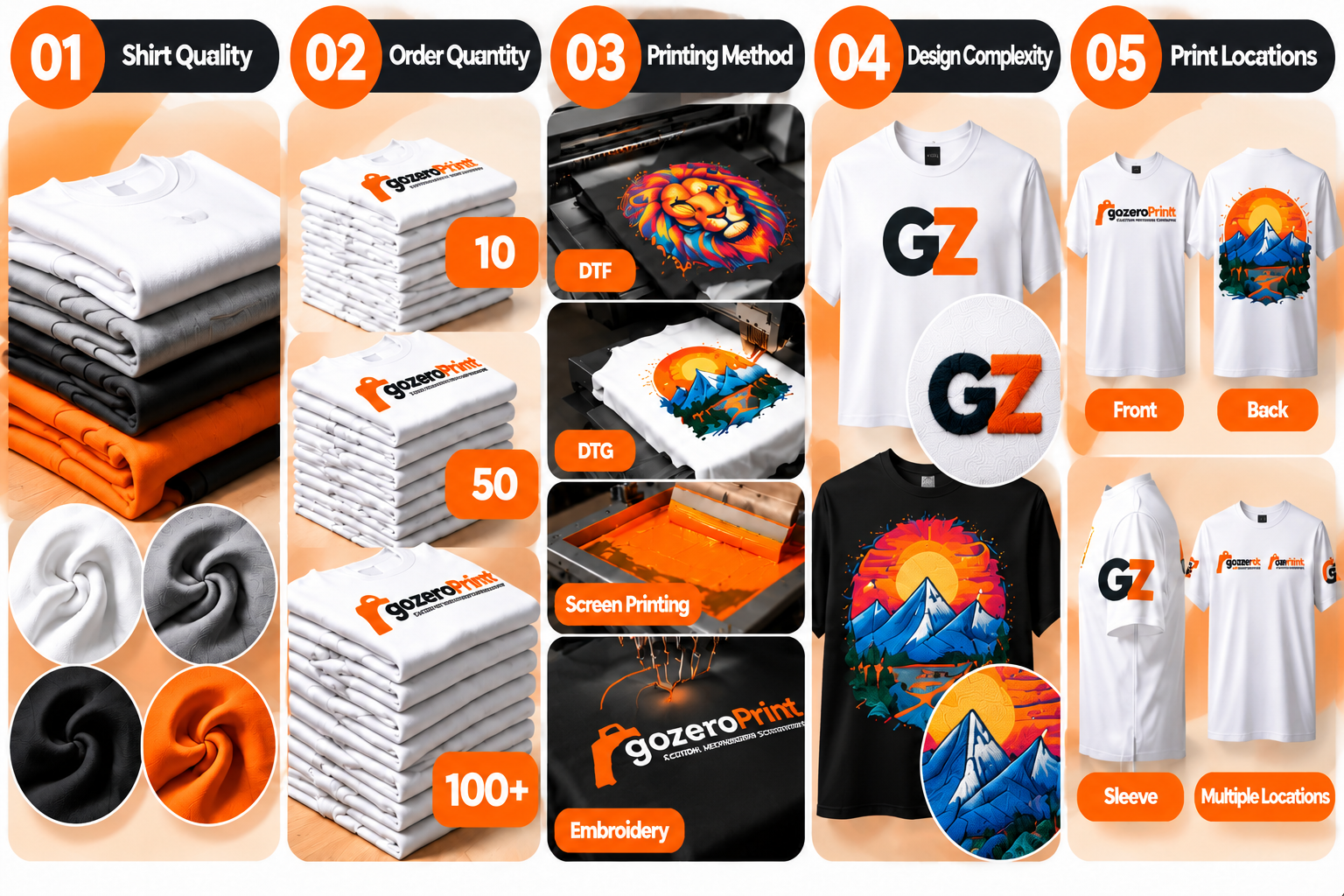
Custom T-shirt printing cost depends on several factors, including shirt quality, order quantity, printing method, design complexity, and the type of customization required. A small order with detailed artwork may cost more per shirt, while bulk orders usually reduce the cost per piece.
Businesses, event organizers, teams, and organizations often compare pricing before ordering custom shirts because the final cost can vary significantly based on their requirements. Understanding what affects custom T-shirt printing prices helps you choose the right option without paying for features you do not need.
This guide explains the main factors that influence custom T-shirt printing cost, compares different printing methods, and helps you understand how pricing works for small and bulk orders.
How Much Does Custom T-Shirt Printing Cost?
The average cost of custom T-shirt printing depends on the shirt type, printing technique, quantity, and design requirements. There is no single fixed price because every order has different specifications.
A few key factors that influence the final price include:
- Type and quality of the T-shirt
- Number of shirts ordered
- Printing method used
- Number of print locations
- Design complexity
- Artwork preparation requirements
- Order timeline
For example, printing 10 shirts with detailed artwork may have a higher cost per shirt compared to ordering 100 or 500 shirts with the same design. Bulk production usually lowers the individual cost because setup and production time are distributed across more items.
For an accurate estimate, businesses should provide details such as shirt style, quantity, design file, preferred printing method, and delivery timeline.
What Factors Affect Custom T-Shirt Printing Prices?
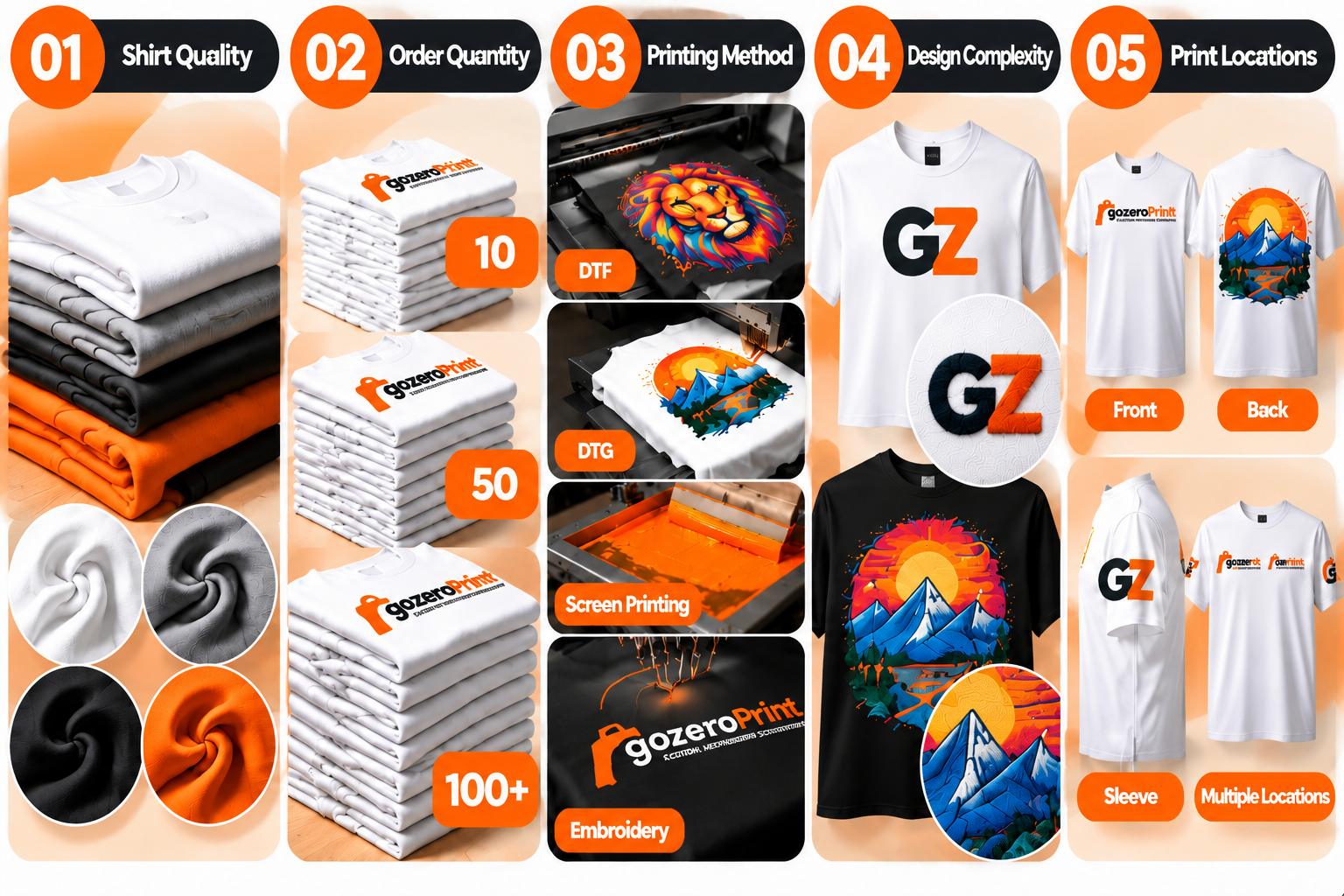
1. Shirt Quality and Fabric Type
The blank T-shirt itself is one of the biggest factors affecting the total cost. Different fabrics provide different levels of comfort, durability, and print quality.
Common shirt materials include:
Cotton T-Shirts
Cotton shirts are popular for everyday wear because they are soft and comfortable. They are commonly used for:
- Business apparel
- Promotional shirts
- Events
- Casual branded clothing
Premium cotton options may cost more because of better fabric quality and durability.
Polyester T-Shirts
Polyester shirts are often used for sports teams, outdoor events, and active environments. They are lightweight and work well for moisture-resistant apparel.
Cotton Blend Shirts
Cotton blends combine comfort and durability, making them suitable for businesses that need professional-looking shirts for regular use.
Choosing a higher-quality shirt may increase the initial cost, but it can improve customer perception and long-term wear.
2. Order Quantity
Order quantity has a major impact on custom T-shirt printing cost.
Small orders usually have a higher cost per shirt because production setup, artwork preparation, and machine time are spread across fewer items.
Bulk orders often receive better pricing because:
- Production becomes more efficient
- Setup costs are divided across more shirts
- Printing workflow becomes faster
For example:
A business ordering shirts for a small team may have a different price compared to an organization ordering hundreds of event shirts.
Before placing an order, consider how many shirts you actually need and whether ordering extra units can reduce the overall cost.
3. Printing Method
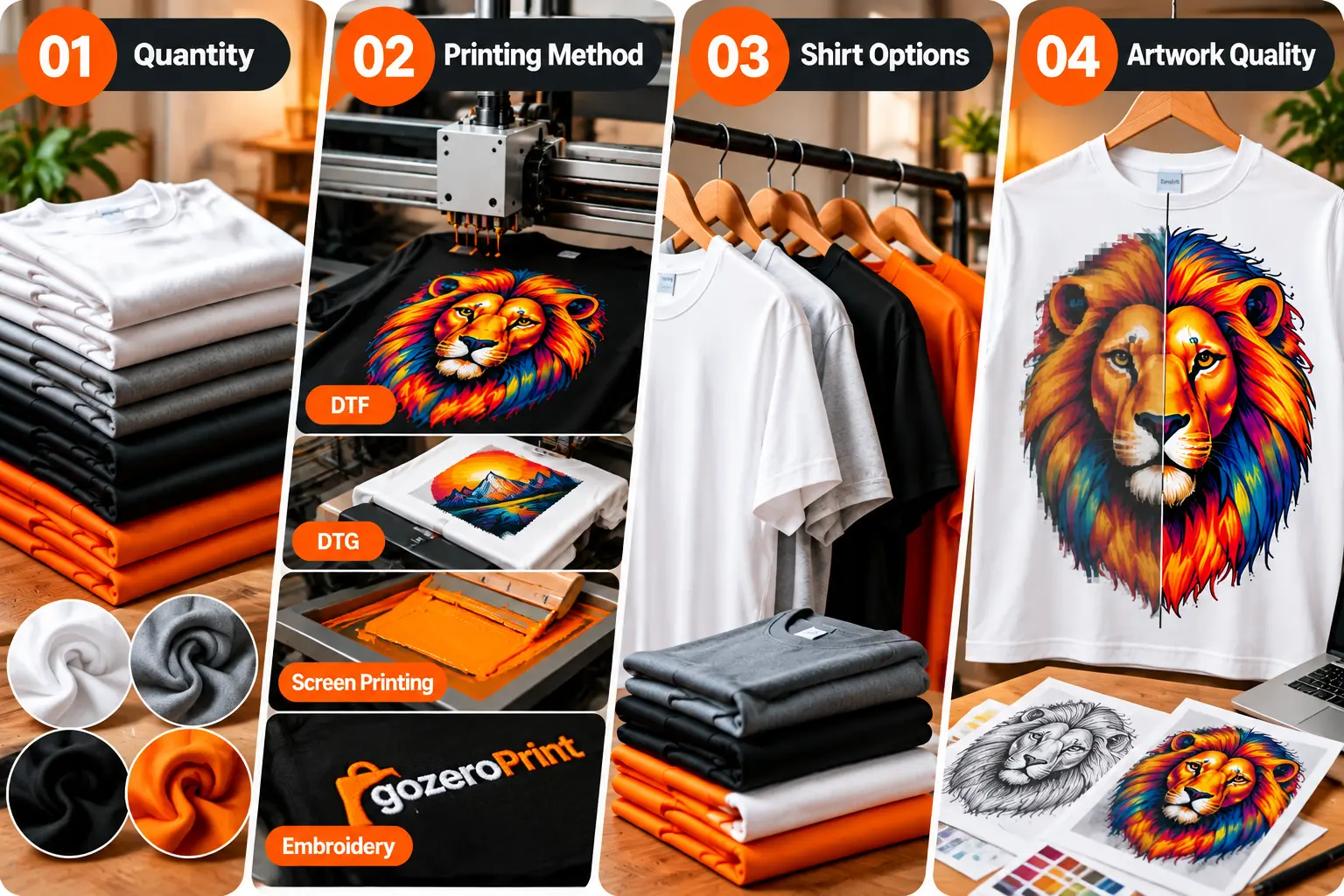
The printing method you choose directly affects the final price. Different techniques are suitable for different designs, materials, and order sizes.
The most common custom T-shirt printing methods include:
- DTF Printing
- DTG Printing
- Screen Printing
- Embroidery
Each method has different advantages depending on your project.
Custom T-Shirt Printing Cost by Printing Method
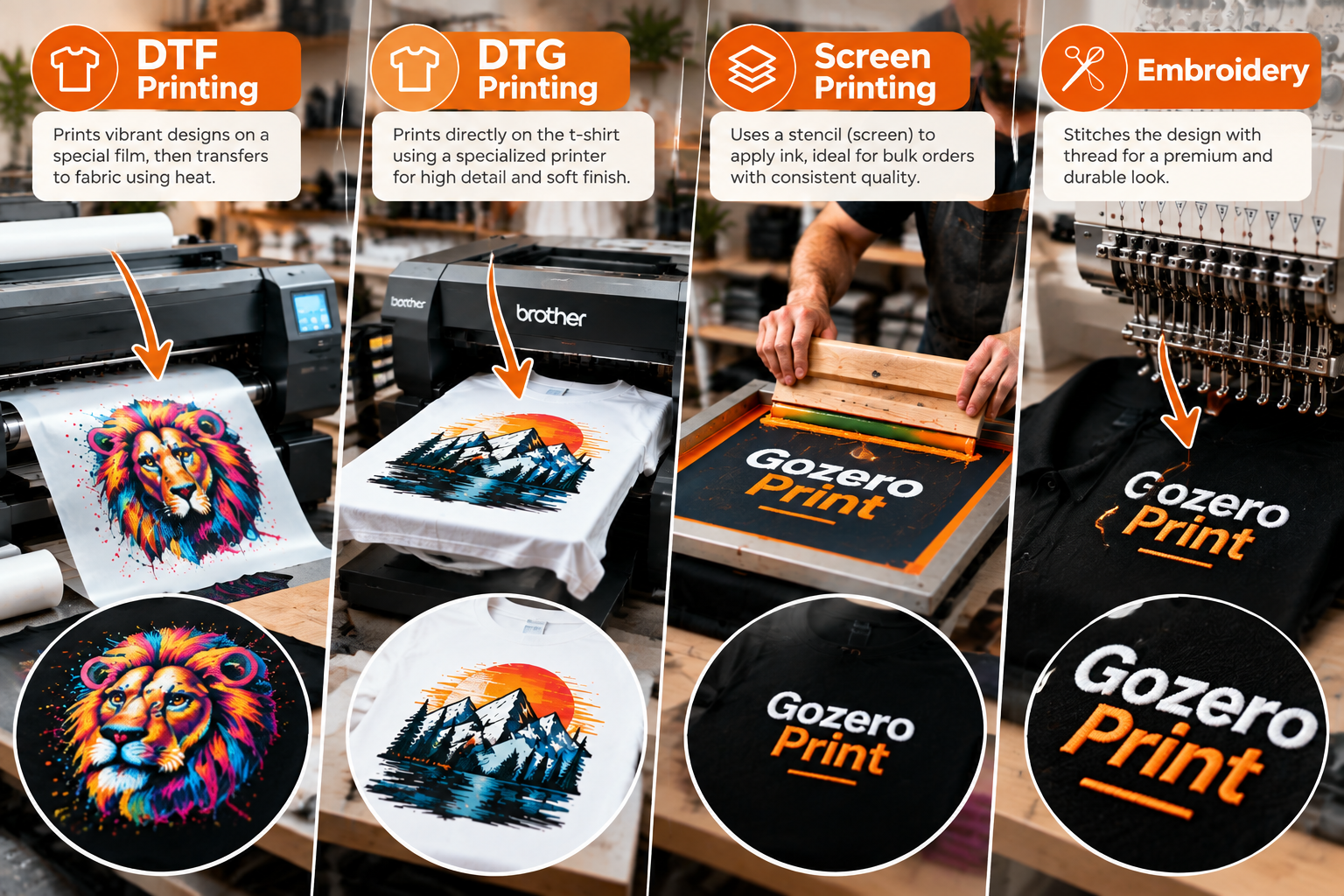
| Printing Method | Best For | Cost Consideration |
| DTF Printing | Detailed and colourful designs | Flexible for small and medium orders |
| DTG Printing | Photo-quality artwork and premium designs | Suitable for smaller orders |
| Screen Printing | Large quantity orders | More cost-effective for bulk printing |
| Embroidery | Professional business apparel | Higher setup cost with durable results |
DTF Printing Cost
DTF (Direct-to-Film) printing is a popular option for custom apparel because it supports detailed designs, multiple colours, and different fabric types.
The cost of DTF printing depends on:
- Design size
- Number of colours
- Shirt quantity
- Shirt quality
- Print placement
DTF printing works well for:
- Small business shirts
- Event apparel
Custom logos
Detailed graphics
For businesses that need colourful designs without ordering extremely large quantities, DTF can be a practical choice.
DTG Printing Cost
DTG (Direct-to-Garment) printing applies ink directly onto the fabric. This method is commonly used for highly detailed artwork and photo-style designs.
DTG printing cost depends on:
- Artwork complexity
- Shirt material
- Ink usage
- Production quantity
DTG is often selected for:
- Clothing brands
- Premium custom shirts
- Small batches
- Detailed designs
It provides a soft print feel because the ink becomes part of the fabric rather than creating a thick layer on top.
Screen Printing Cost
Screen printing is one of the most commonly used methods for bulk custom T-shirt orders. It works by applying ink through a prepared screen onto the shirt, making it a popular choice for businesses, events, schools, and organizations ordering larger quantities.
The cost of screen printing depends on:
- Number of shirts
- Number of print colours
- Design complexity
- Number of print locations
- Shirt quality
Screen printing is often more cost-effective for bulk orders because the setup cost is distributed across many shirts.
It is a good option for:
- Company uniforms
- Event shirts
- Sports teams
- Promotional campaigns
- Large group orders
For simple designs with fewer colours, screen printing can provide consistent results at a lower cost per shirt.
Embroidery Shirt Cost
Embroidery creates a stitched design directly onto the fabric, giving shirts a professional and durable appearance.
The cost of embroidery depends on:
- Logo size
- Stitch count
- Design complexity
- Number of shirts
- Shirt material
Embroidery is commonly used for:
- Corporate apparel
- Staff uniforms
- Polo shirts
- Professional branded clothing
Businesses often choose embroidery when they want a long-lasting logo application with a premium appearance.
DTF vs DTG vs Screen Printing vs Embroidery: Which One Should You Choose?
Choosing the right printing method depends on your design, quantity, and purpose.
| Printing Method | Best Choice For | Advantages |
| DTF Printing | Colourful designs and flexible orders | Works on different fabrics with detailed prints |
| DTG Printing | Small orders and detailed artwork | Excellent for photo-quality designs |
| Screen Printing | Bulk orders | Cost-effective for larger quantities |
| Embroidery | Business and professional apparel | Durable and long-lasting finish |
There is no single best printing method for every project. A small clothing brand may prefer DTG or DTF for detailed designs, while a company ordering hundreds of shirts may find screen printing more practical.
How Much Does It Cost to Print 50 or 100 Custom Shirts?
The cost per shirt usually changes based on order quantity.
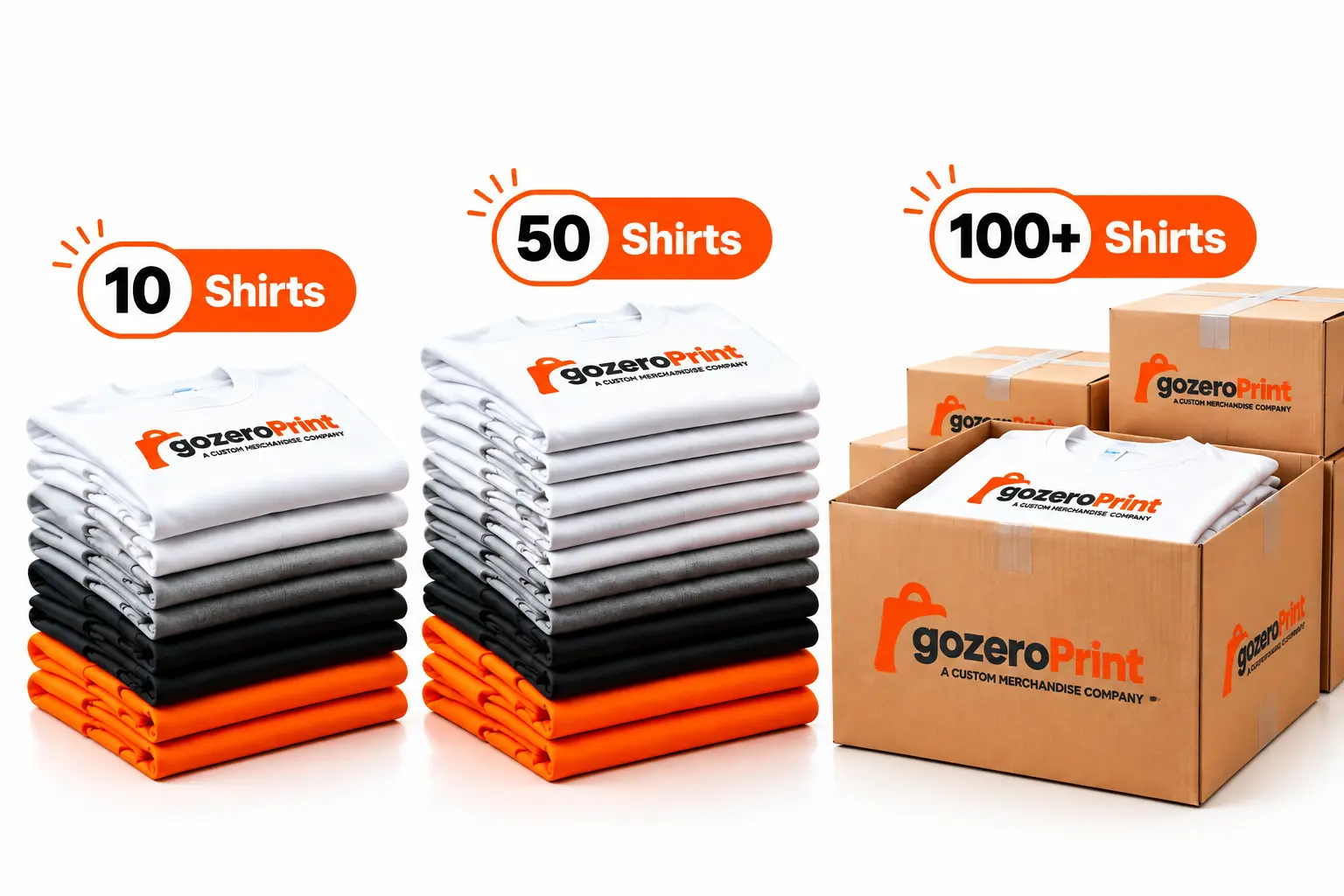
Small Orders (Around 10–50 Shirts)
Small orders often have a higher cost per shirt because:
- Setup time remains similar
- Production costs are spread across fewer items
- Customization requires more preparation
Small quantities are common for:
- Team shirts
- Small events
- Startup businesses
- Limited product launches
Medium Orders (Around 50–100 Shirts)
Medium-size orders usually provide better value because production becomes more efficient.
These orders are common for:
- Business teams
- Corporate events
- Community groups
- Marketing campaigns
Bulk Orders (100+ Shirts)
Bulk orders generally reduce the cost per shirt because printing providers can optimize production.
Bulk printing is suitable for:
- Large events
- Schools
- Organizations
- Retail merchandise
- Company-wide uniforms
The best quantity depends on your actual needs, storage capacity, and future use.
Choose the Right T-Shirt Type for Your Custom Printing Project
The type of T-shirt you choose can have a big impact on the overall cost, comfort, and final appearance of your custom apparel. Different styles work better for different purposes, including business uniforms, events, sports teams, promotional campaigns, and everyday branded wear.
GoZero Print offers a variety of custom T-shirt options to match different needs and budgets.
Short Sleeve T-Shirts
Custom Short sleeve T-shirts are a popular choice for businesses, events, and team apparel. They provide a comfortable everyday option and work well with different printing methods, including DTF printing, screen printing, and embroidery.
Long-Sleeve T-Shirts
Custom Long sleeve T-shirts are suitable for outdoor teams, cooler environments, and workwear branding. They provide extra coverage while still allowing businesses to showcase their logo and brand identity.
Polo Shirts
Custom Polo shirts offer a more professional appearance compared to regular T-shirts. They are commonly used for company uniforms, customer-facing teams, corporate events, and staff branding.
Performance & Athletic Shirts
Custom Performance shirts are designed for active environments such as sports teams, fitness groups, and outdoor events. Their lightweight fabric makes them suitable for comfortable movement while displaying custom designs.
Tank Tops & Sleeveless Shirts
Custom Tank tops and sleeveless shirts are ideal for gyms, fitness events, summer promotions, and casual team activities. They provide a relaxed style while supporting custom branding.
Kids T-Shirts
Custom Kids T-shirts are a great option for schools, family events, community programs, and youth organizations. Custom designs can help create a memorable experience for children and participants.
Choosing the right T-shirt style helps you balance quality, comfort, design requirements, and printing costs. Whether you need shirts for a business team, event, or promotional campaign, selecting the right apparel type can improve the final result.
Ways to Reduce Custom T-Shirt Printing Costs
Businesses can reduce printing expenses by making smart decisions before ordering.
1. Order in Larger Quantities
Bulk orders often provide better pricing because production becomes more efficient.
Instead of ordering small batches repeatedly, planning future needs can help reduce the average cost.
2. Choose the Right Printing Method
Selecting the correct printing method prevents unnecessary expenses.
For example:
- Screen printing may work better for large simple designs
- DTF may suit colourful designs with smaller quantities
- Embroidery may be better for professional uniforms
- The cheapest option is not always the best option. The right method depends on your goal.
3. Prepare Artwork Correctly
Poor-quality artwork can create delays and additional preparation work.
Before ordering, prepare:
- High-resolution logo files
- Correct colours
- Proper design dimensions
- Suitable file formats
A ready-to-print design helps create a smoother production process.
4. Select the Right Shirt Quality
Choosing the cheapest shirt option may reduce initial costs but can affect comfort and durability.
Consider:
- How often the shirts will be worn
- Who will use them
- The purpose of the apparel
Business uniforms may require different quality compared to one-time event shirts.
Common Mistakes That Increase Custom Shirt Costs
Many customers face unexpected costs because of planning issues.
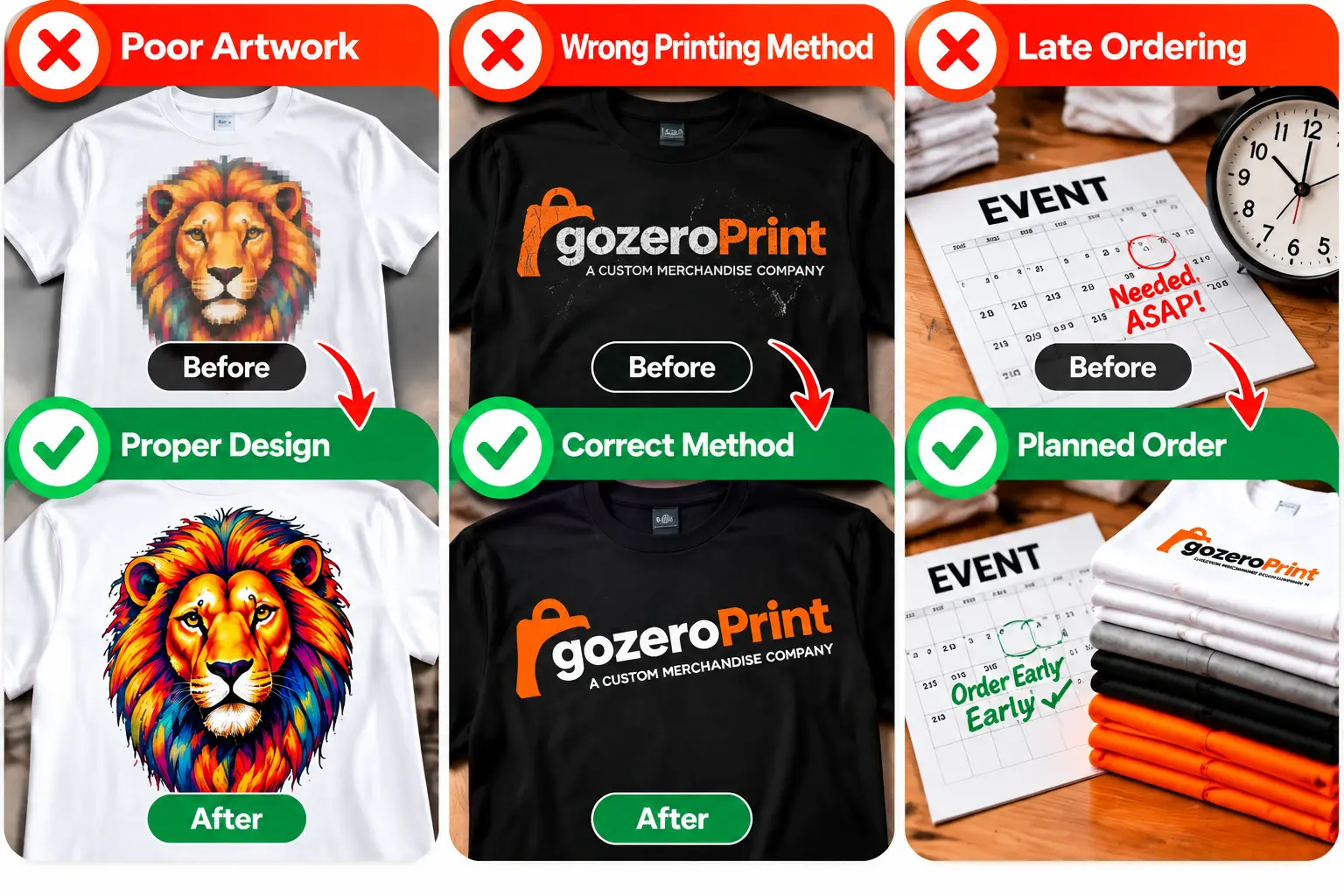
Choosing the Wrong Printing Method
A printing method that does not match the design or quantity can increase expenses.
Example:
Using a method designed for small detailed orders for hundreds of simple shirts may not be the most cost-friendly option.
Ordering Too Late
Rush production may create additional costs depending on project requirements.
Planning ahead gives more flexibility with:
- Printing options
- Production scheduling
- Delivery timelines
Ignoring Print Placement
The number of print locations affects pricing.
A shirt with:
- Front logo only
usually costs less than:
- Front logo
- Back design
- Sleeve printing
Providing Low-Quality Artwork
Blurry images or incorrect files can delay production and affect final print quality.
Always provide the best available artwork before starting production.
How to Get an Accurate Custom T-Shirt Printing Quote
To receive an accurate price estimate, prepare these details:
1. Choose Your Shirt Type
Decide:
- Shirt style
- Fabric type
- Colour options
- Quantity
2. Prepare Your Design
Provide:
- Logo files
- Artwork
- Preferred colours
- Print size
3. Select Printing Method
Discuss whether DTF, DTG, screen printing, or embroidery fits your project.
4. Confirm Order Details
Include:
- Number of shirts
- Sizes required
- Delivery location
- Required deadline
Having complete information helps printing providers recommend the right option and provide accurate pricing.
Why Choose Gozero Print for Custom T-Shirt Printing?
Gozero Print helps businesses, organizations, and teams create custom apparel based on their branding needs.
From custom T-shirts and branded shirts to DTF printing, DTG printing, screen printing, and embroidery, choosing the right production method helps create apparel that matches your design goals and budget.
Whether you need shirts for a business team, event, promotional campaign, or organization, Gozero Print can help you select the right printing solution.
Final Thoughts
Custom T-shirt printing cost depends on more than just the shirt itself. Factors like fabric quality, order quantity, printing method, and design requirements all influence the final price.
Understanding these factors helps you choose the right option for your project and avoid unnecessary expenses.
Before placing an order, consider your purpose, quantity, design requirements, and preferred finish. A clear plan makes it easier to get quality custom shirts that match your budget and expectations.